
1960s Covent Garden. Memories of Pollocks in Seven Dials Posted on
People often ask me “how did you get into running a toyshop and the London institution of Pollocks?”
I say I was born into it. And whilst I wasn’t a member of the Pollock family, neither the Fawdrys or the Baldwins, I grew up with Pollocks and worked for both. The story started for my family when my Dad (before I was born) ran the shop at 44 Monmouth Street, Covent Garden for Marguerite Fawdry. Educationalists and champions of children’s creativity, Marguerite and her husband Kenneth mentored shy young creatives with encouragement for writing stories, putting on plays and making things. School holidays were spent visiting (and working at) the Museum in Fitzrovia. I started young, making school books for dolls and sewing ‘Little Lizzie’ doll kits by Maria Wood. I graduated to the Covent Garden shop as a teenager, counting dolls eyes for the annual stocktake.
Pollocks was asked to be one of the first boutiques to open in the newly renovated Covent Garden after London’s fruit and vegetable market moved to Nine Elms in Vauxhall. Marguerite opened her second London shop at No. 44 Covent Garden in 1980 initially as a Doll & Christening boutique. She chose the small shop on the first floor, formerly an office for the market accountants, because it was the same number as where she had started in Monmouth Street nearly 20 years earlier. When the Fawdry’s sold the business and shop to actor and toy theatre collector Peter Baldwin together with his brother Christopher in 1988, the toy theatres were reinstated as the main attraction. I came with the shop as the resident Saturday girl.
Once the ethos of Pollocks is instilled and is in your veins, it’s hard to escape. Over 40 years later I am still here at 44 Covent Garden with a brilliant team run by Chiara Scoglio who I asked to interview my Dad. As many of you who are interested in Pollocks know, the much loved Museum in Fitzrovia started by Marguerite Fawdry in the 1970s closed down after the pandemic in early 2023. Eddy Fawdry (Marguerite’s grandson) ran the Fitzrovia Museum in parallel to our Covent Garden shop for 20 years. His father John was the reason our family became part of the Pollocks story. John Fawdry died in 2025 and so these reminiscences from my Dad (James Heard) are a small tribute to that time in the late 1960s in Covent Garden which I can only imagine from the stories told was impossibly glamorous. These are just some of them. Louise Heard 2026
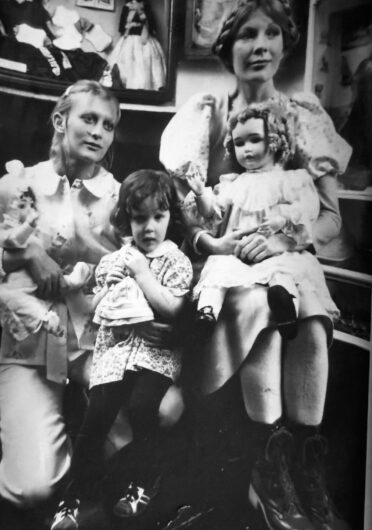
Louise Heard at Pollock’s Toy Museum as a child
Chiara: Let’s start from the beginning: what or who introduced you to the Pollock’s world in the first place? When was this and what was your role?
James: I first had a Pollocks Toy theatre aged about eight. The setting was very pretty but the play made no sense at all because the Silver Palace was based on a water pageant originally performed at Sadlers Wells. So the toy theatre was forgotten until I came to work at no 44 Monmouth Street. I have never kept a diary so exactly when, that year is forgotten but I vividly remember the first time I met Marguerite [Fawdry] .
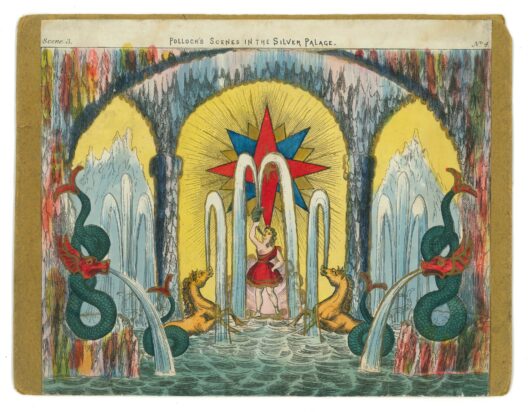
Pollock’s Toy Theatre Scene from The Silver Palace
It was a glorious summer’s Sunday when my school friend John Fawdry took me to meet his parents in South Kensington.
It was teatime and it was as if I had walked into an 18th century French salon. There was a discussion that ranged from the writer Denton Welch to the origins of the Duo Decimal system. Marguerite presided over the proceedings. As a young schoolboy I knew nothing of blue stockings but this saviour of the juvenile drama was just that.
What was my role at no 44? I ran the shop when Marguerite was elsewhere. I manned the old fashioned till that was both brassy and noisy with bells ringing and the drawer crashing shut. When the shop closed it was time to climb the stairs to check the museum cases to reposition the Victorian dolls that had moved drunkenly off their wire stands or clean the grubby finger marks off the glass cases. I was a jack of all trades without much expertise in any of my important roles.
Chiara: How would you describe Covent Garden in the 1960s? What kind of shops were there? Were there other shops similar to Benjamin Pollock’s Toyshop – independent and specialised?
James: Monmouth Street had a distinct character- a village [known as Seven Dials] amongst many. There was a butcher, a sweet shop, an iron monger and a cobblers as well as two pubs and the French bistro Mon Plaisir. Further up the street was a ships chandlers which originally sold ropes and tackle to the many theatres in the area. There were no coffee shops, no shoe shops or chain shops, but we did have Cornelissen who supplied Whistler with oil paints, Russell and Chapple whose canvases could be found in many an artist’s studio as well as the theatres of Covent Garden. Brodie and Middleton was an old established supplier of special paints for making scenery but they did have a line a cheap oil paints for artists. So Covent Garden with its satellite villages was the place to be for a young painter as I was then, a few years out of art school.
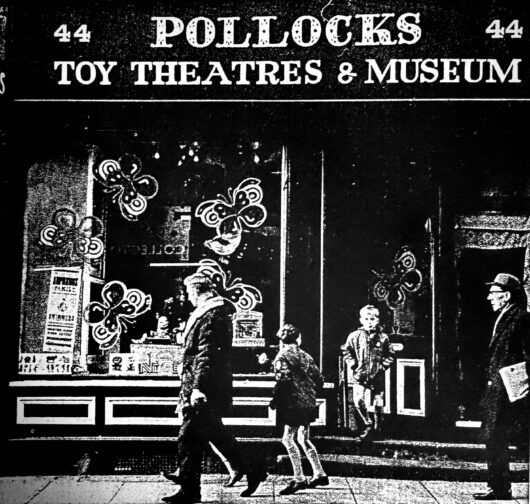
Pollocks at 44 Monmouth Street, Covent Garden in the 1960s
Chiara: How was Pollock’s different from today, if at all? And who were the customers?
James: In spite of the many technological changes since Marguerite set up shop in Monmouth Street the spirit of no 44 remains at Pollocks. I can’t say the character has ever changed much. For me at Monmouth Street in the late 1960s, it was the clientele that gave Pollocks its distinctive flavour – from the toy makers John Gould and Yootha Rose, actors Amanda Barrie and Wendy Craig, musical talents George Melly, Sandie Shaw and American visitors like Bobbie Gentry (“Ode to Billie Joe”) and the socialite Princess Lee Radziwill who memorably visited the Monmouth street shop wearing an a white wool coat by Ungaro. I am sure there are many more interesting shoppers who I neither recognised or came from worlds beyond mine.
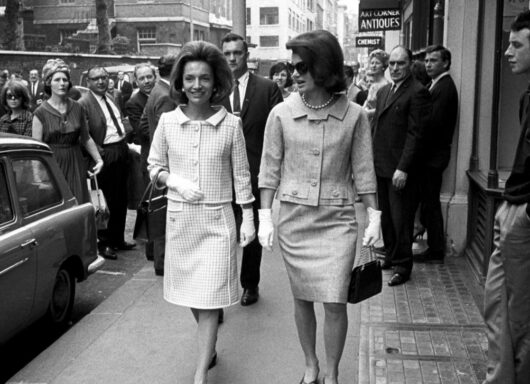
Lee Radziwell and Jackie Kennedy in London 1960s. Image via The Times
Chiara: As your role was similar to mine now at Benjamin Pollock’s Toyshop over 50 years later, I’m interested in your responsibilities as the museum curator for Pollocks: how was the collection sourced and put together? Did you ever host temporary exhibitions about specific subjects?
James: I wasn’t the curator. I just used that title to get cheaper car insurance…
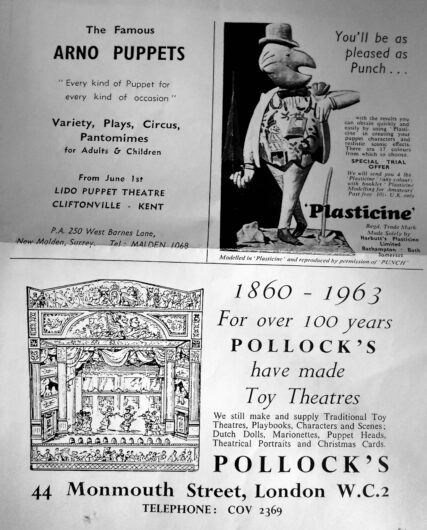
Pollocks Advert in Puppet Master 1963
Chiara: You must have so many incredible stories from the time – what are some of your favourites? Did you ever find yourself on an adventure while sourcing toys?
James: Marguerite told the story of the local council being approached to mark the site of Pollocks original shop in Hoxton. They declined because they feared that local youths would desecrate the plaque by altering the P of Pollocks to a B! ( I have got to visit the site as I understand there is now a plaque)
Sir Roy Strong was invited to Scala Street (the Fitzrovia location of the Museum after it outgrew Monmouth Street) to open the new ‘wing’. The ending of his speech was greeted by an alarming crack. The rickety old building started to groan under the weight of so many visitors. The ceiling of the ground floor shop cracked and we had to evacuate the old town house. Nobody was hurt.
Pollocks sold Victorian peg dolls, known as Dutch Dolls. This name was a corruption of ‘Deutch’ so Marguerite sent me and her son John to the source of these dolls in the German speaking part of the Italian Dolomites. How Marguerite discovered this barn high up in the mountains is now a mystery. An ageing Austen J4 van was hired which John drove. On the journey out we slept in the van. Having packed the van with many brown paper packages we had a problem. Once we found a suitable spot for the night we half emptied the van to create a flat but uncomfortable bed which was half in the van and half on the ground with the doors open. We had no access to bathing facilities and washed where we could. In one small French village we jumped into the fountain in the square, in just our underwear. The locals were too taken aback to protest at these English boys desecrating this pride of the commune. We hurriedly repacked our bed of wooden dolls and made off quick, back towards London.
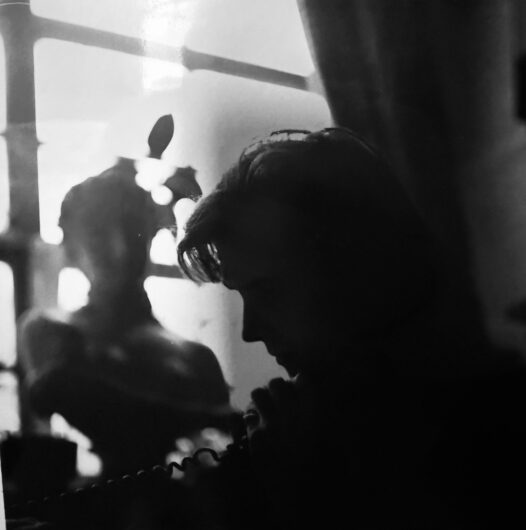
James Heard (now with car insurance)
Chiara: We’d love to hear more memories of 44 Monmouth Street from you and of course customers. We do still meet people who visited Pollocks in Monmouth Street such as Bob Ringwood and Clive Hicks-Jenkins. If you visited please do share your memories and photos.